

The construction industry continuously seeks materials that improve strength, durability, efficiency, and long-term performance. As modern infrastructure demands growth, builders and manufacturers rely on advanced chemical compounds to enhance traditional construction materials. One such important compound is lithium carbonate.
Although lithium carbonate is best known for its use in the production of glass and ceramics, its significance in the building industry goes beyond that. Lithium carbonate plays a subtle but vital function in contemporary construction applications, from boosting glass strength and ceramic surfaces to improving cement performance.
The Various Uses of Lithium Carbonate in the Construction Sector
Cement and Concrete Applications
To prevent alkali silica reactions, which can lead to structural damage and cracking, lithium carbonate is added to cement and concrete. It increases the stability and longevity of concrete by decreasing internal expansion. Precast components and mortar repairs are particularly helpful in infrastructure projects where lengthy service life is essential.
Construction Glass Manufacturing
Lithium carbonate enhances thermal stability and melting efficiency in construction glass. It contributes to the creation of glass that is more resilient to heat and temperature fluctuations. These characteristics are crucial for energy-efficient glazing systems and architectural glass safety in contemporary buildings.
Ceramic Tiles
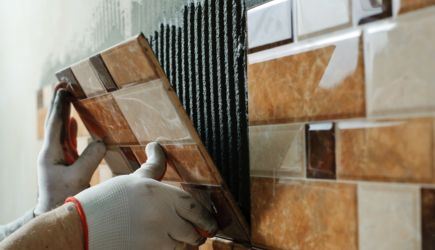
Lithium carbonate functions as an additive in sanitaryware and ceramic tiles, increasing material strength and firing efficiency. It improves glazing smoothness and surface durability while lowering defects like warping and cracking. This guarantees uniform quality in bathroom fixtures, wall tiles, and flooring.
Insulation and Fire-Resistant Materials
Thermal stability is supported by lithium carbonate in fire-resistant building materials and insulation. It contributes to increased fire safety and adherence to building codes by assisting materials in maintaining their structural integrity at high temperatures.
Construction Coatings and Surface Finishes
Lithium carbonate enhances adhesion and cure performance in construction paints. For industrial and architectural surfaces, this leads to smoother finishes, increased durability, and long-lasting protection.
Lithium carbonate plays an essential role for enhancing the functionality of building materials used in both large-scale infrastructure projects and regular buildings. It can be utilized in concrete glass ceramics and safety-related applications due to its capacity to improve durability strength and thermal stability.
The need for dependable and effective material solutions will increase as building requirements continue to improve. Lithium carbonate is a reliable option in the production of contemporary building materials because it meets these demands by providing reliable performance and long-term value.